
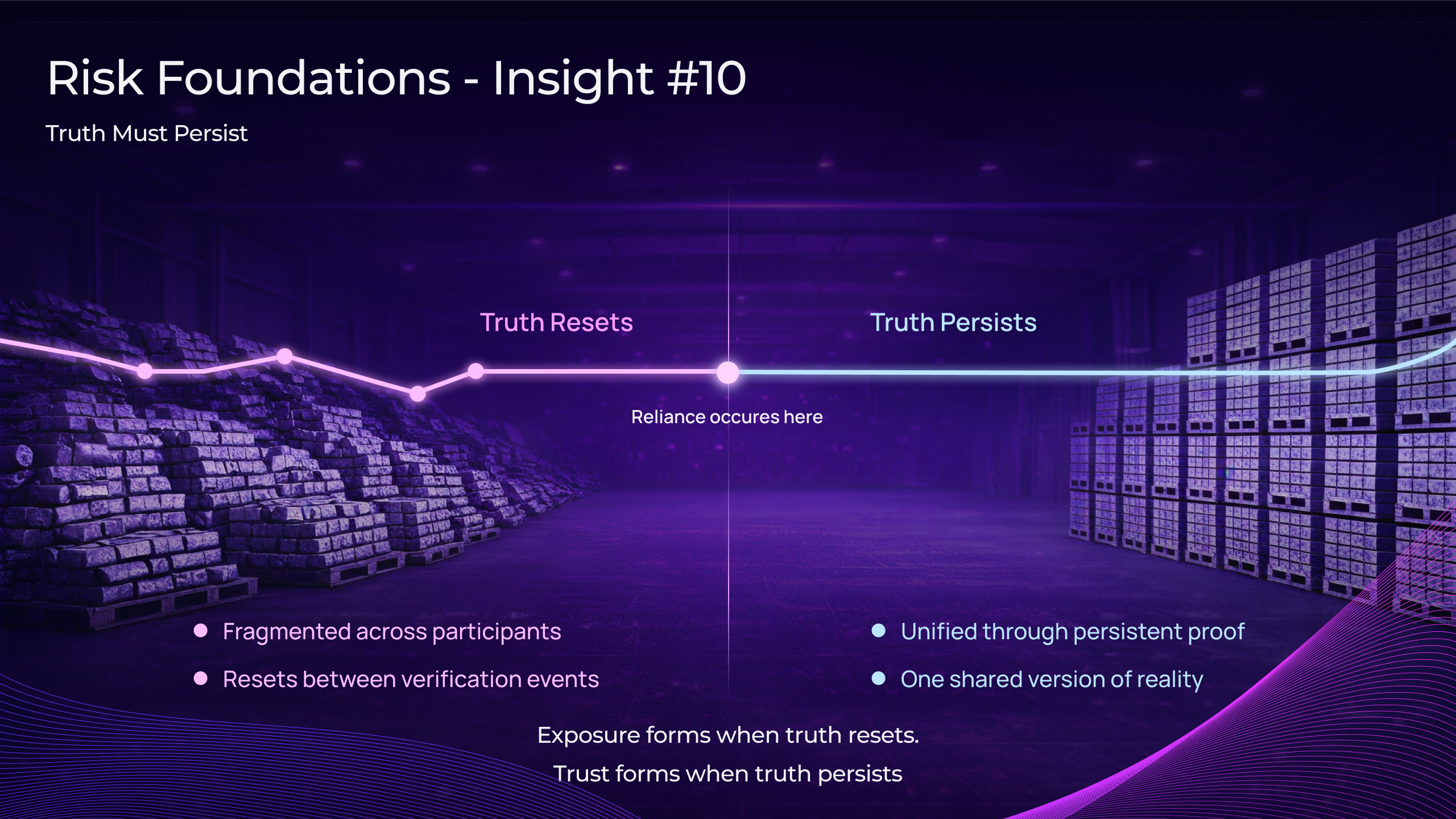
Across this series, we have explored how risk forms in commodity markets — not at the point of loss, but when reliance becomes binding. Each insight points to the same structural condition: documentation, verification, and representation do not persist as physical reality changes. Commodity markets operate without a shared, continuously enforceable version of truth. And when truth does not persist, exposure forms.

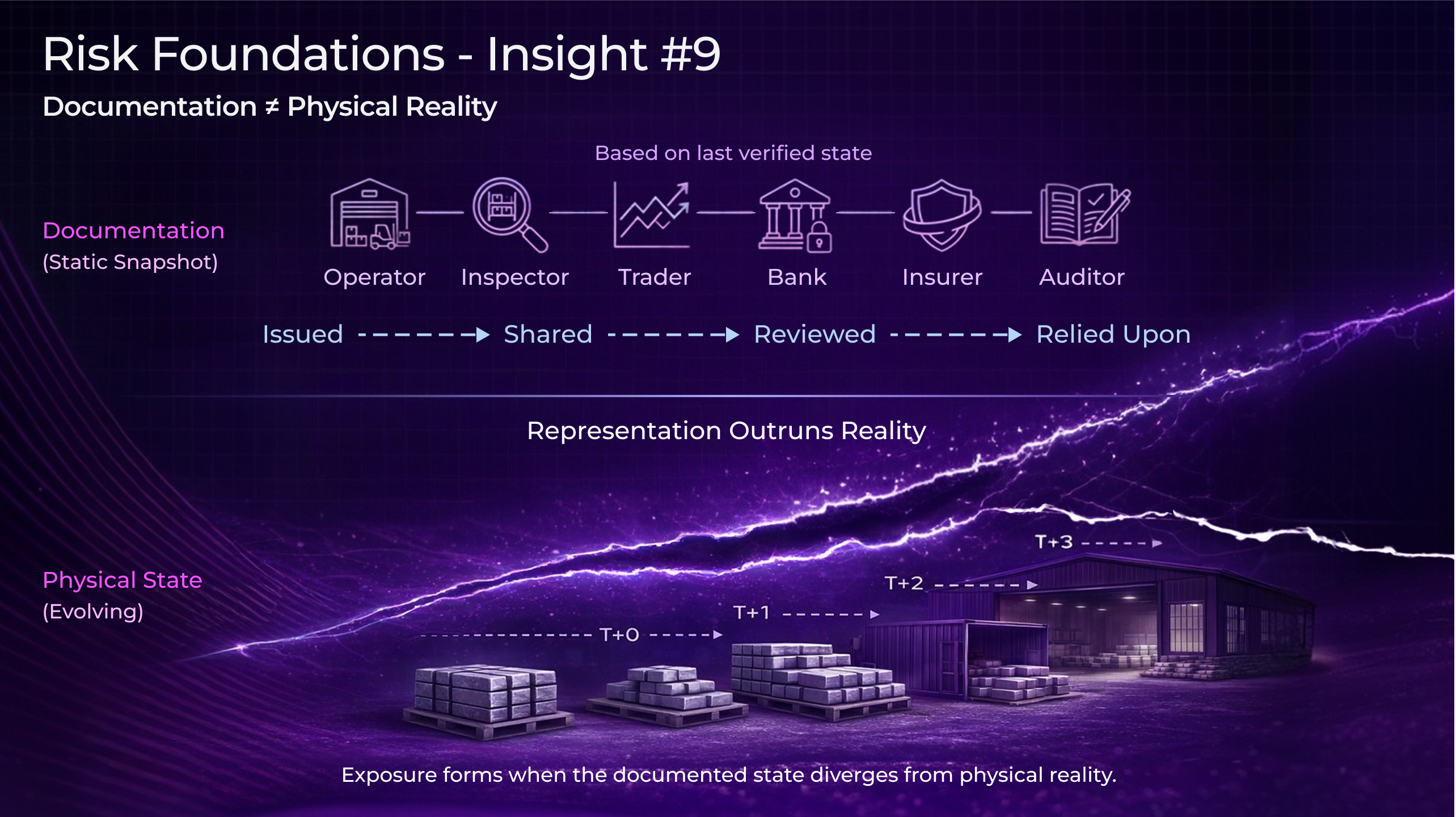
In the previous insight, we explored why commodity markets lack a shared, enforceable version of physical truth. Verification occurs across many participants but rarely accumulates into a single foundation all can rely on. Even when verification is performed correctly, a structural gap remains: financial systems move at the speed of documentation, while collateral moves at the speed of reality. The gap between them is where exposure forms.
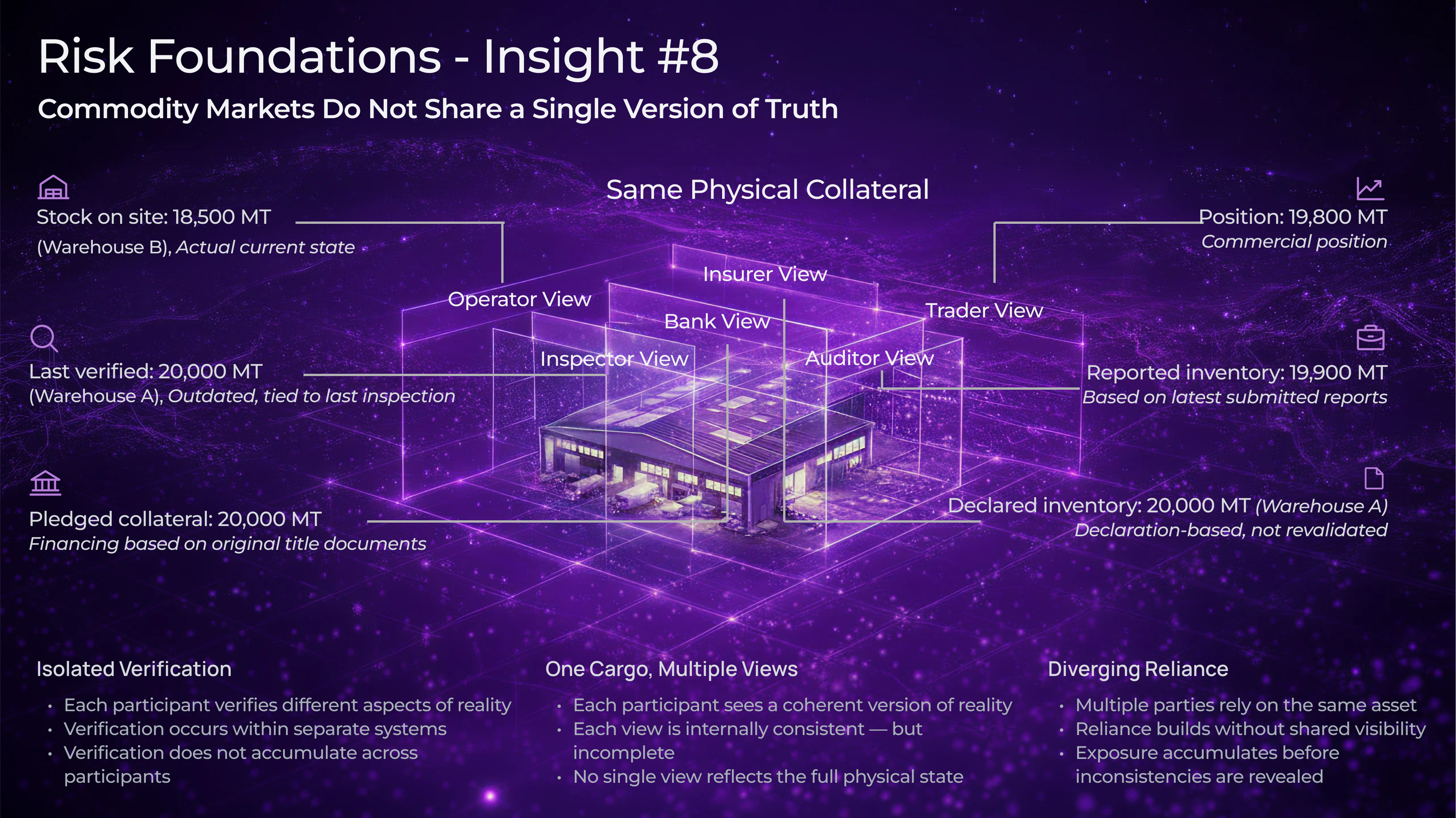
Earlier insights explored how risk forms, why inventory depends on continuous constraint, why location must be proven, and how verification and documentation can fail to persist across systems. This piece examines a deeper issue: even when organisations verify correctly, commodity markets lack a shared, continuously enforceable version of physical truth. Without shared truth, reliance becomes fragmented.
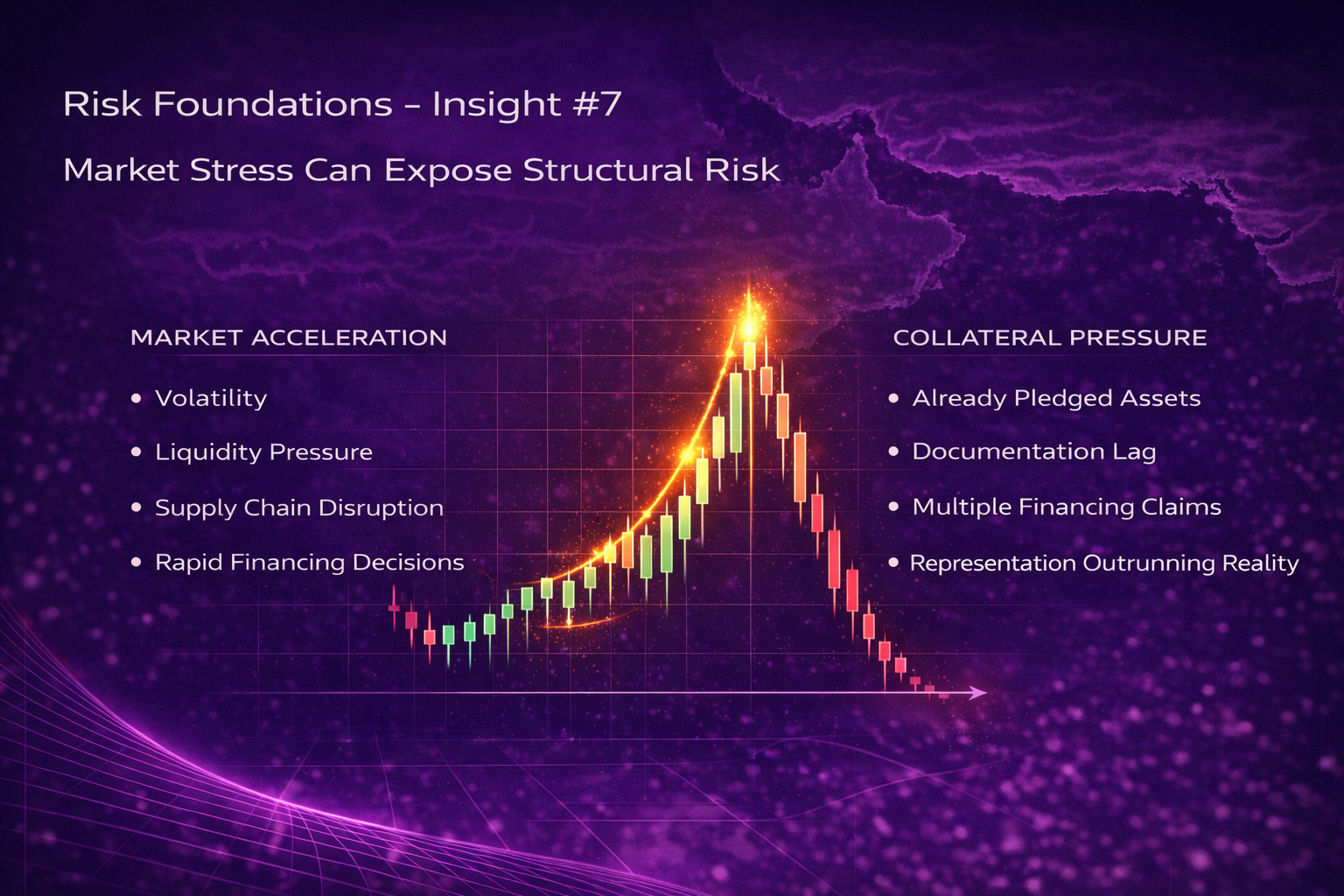
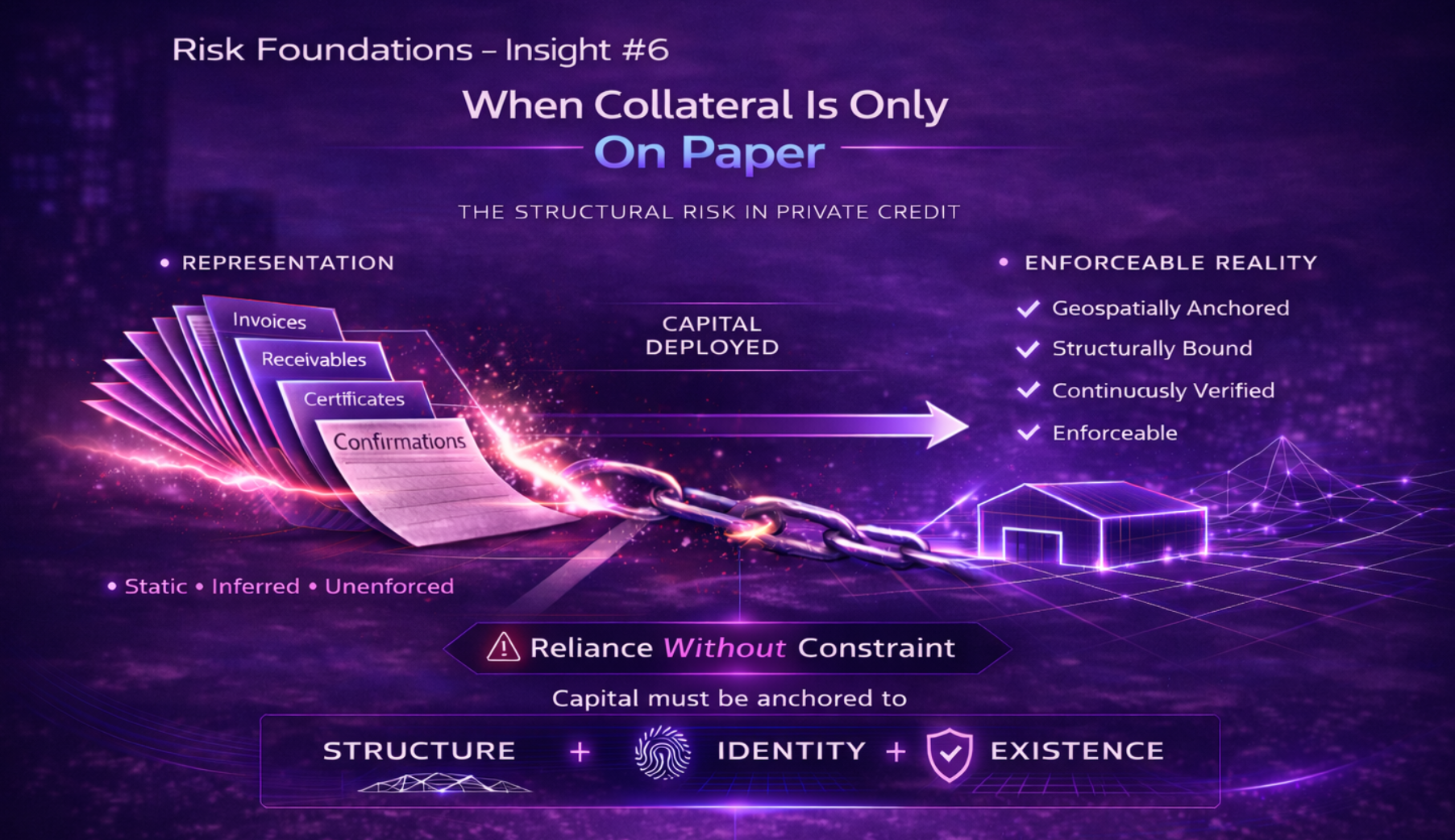
Earlier insights in this series examined how commodity risk forms — why inventory only exists while continuously constrained, why location must be proven first, why documentation must be tied to verified existence, and why verification cannot persist without a persistent identity. This insight considers another structural dynamic: how periods of market stress can expose weaknesses already present within commodity systems, forcing the moment when representation must reconcile with reality
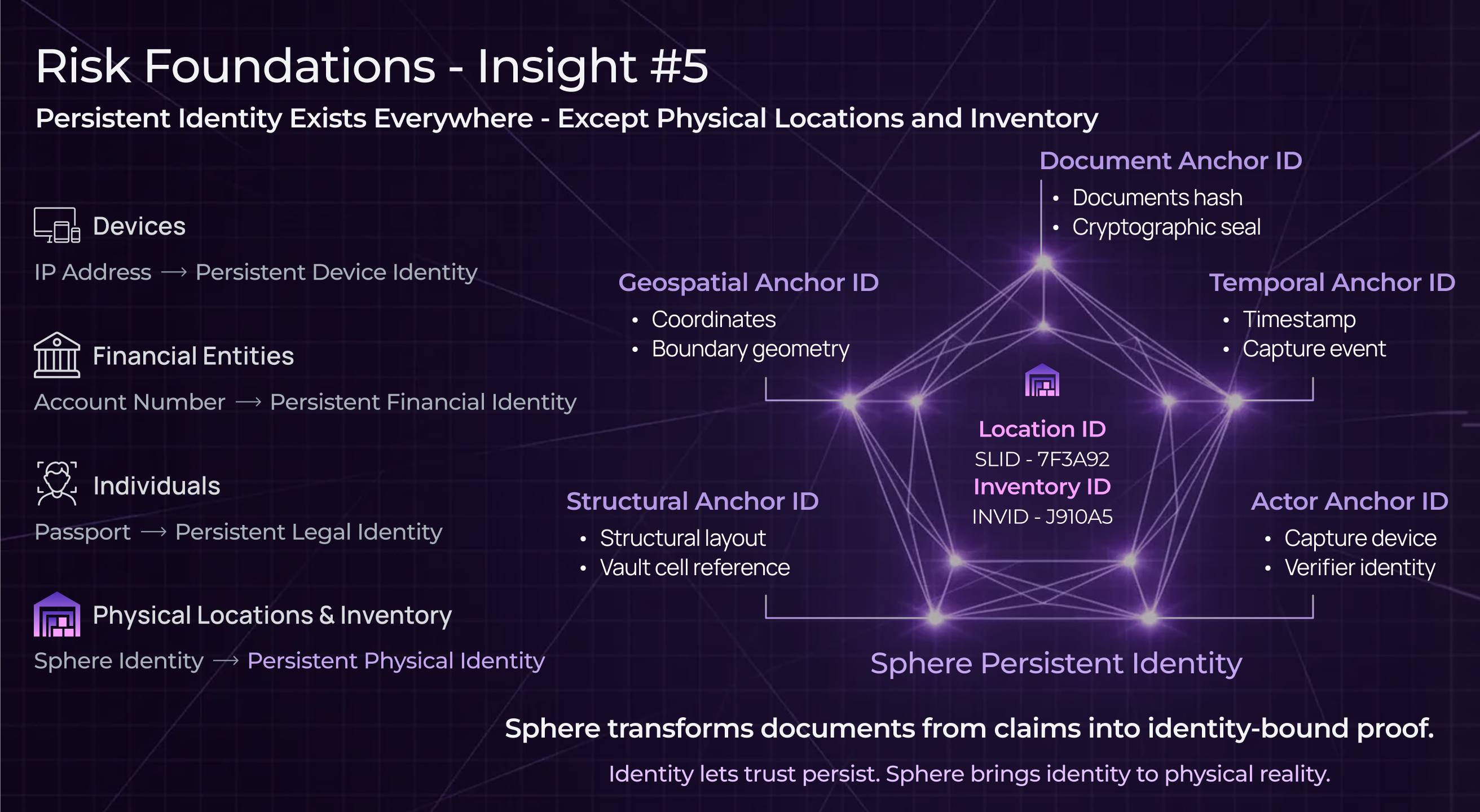
In earlier insights, we explored when risk forms, why inventory only exists while continuously constrained, why location must be proven first, and why documentation must be bound to verified existence. This piece moves one step deeper: even when assets and documentation are verified, verification itself cannot persist without persistent identity.
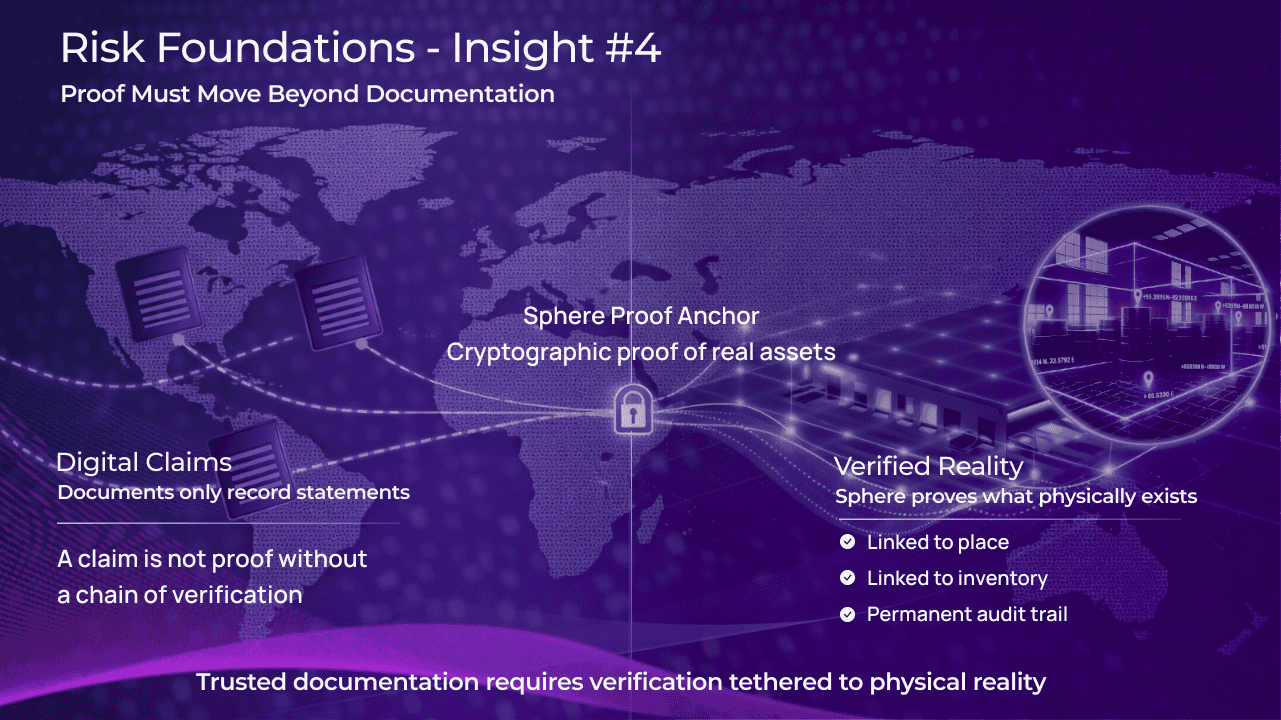
In earlier insights, we explored when risk forms, why inventory only exists while continuously constrained, why location must be proven first, and why documentation must be bound to verified existence. This piece moves one step deeper: even when facilities, inventory, and documentation are verified, verification itself cannot persist without persistent identity.
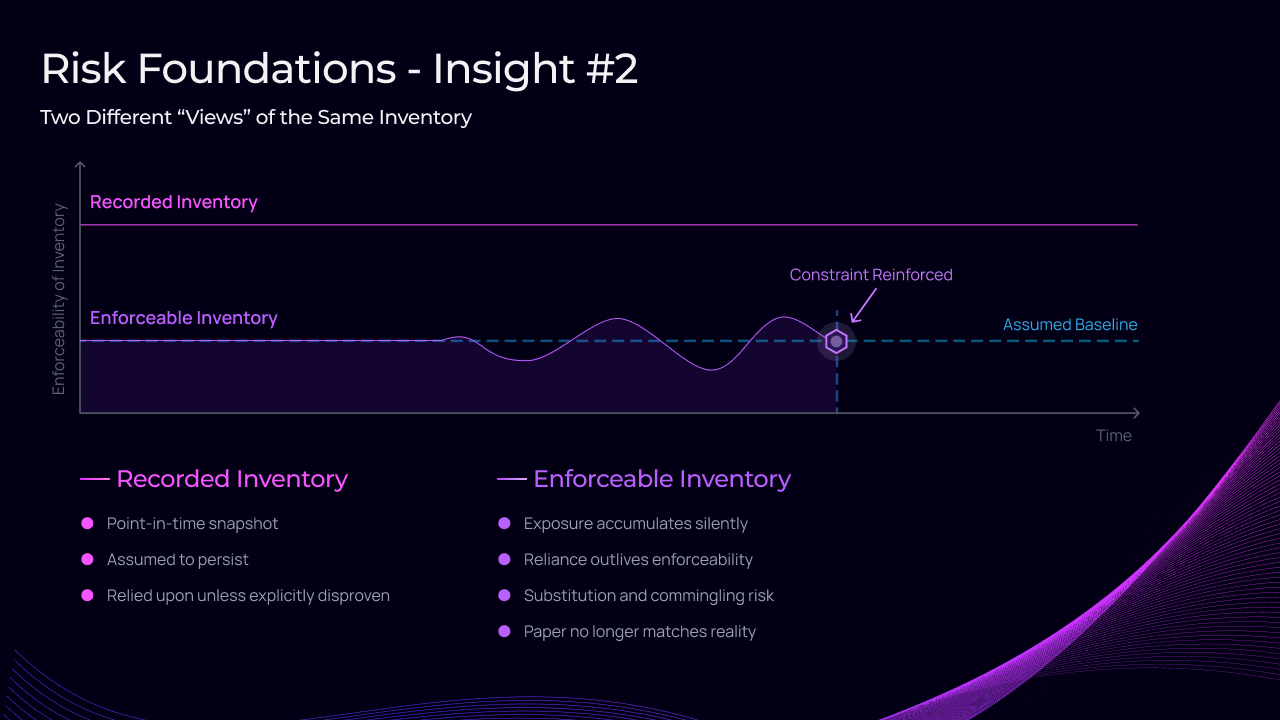
In earlier insights, we explored when risk forms, why inventory only exists while continuously constrained, and why location must be proven first. This piece moves one step further: even when place and inventory are validated, trust can still drift if documentation is not anchored to continuously verified reality.

In earlier insights, we explored when risk forms and why inventory only exists while continuously constrained. This piece moves one step deeper: before inventory can be trusted at all, the place that contains it must first be proven.
This article examines why large commodity losses rarely begin with a single failure but instead emerge when inventory is treated as a static fact, physical environments continue to change, and assumptions about existence are relied upon without being continuously enforced.

This article examines why large commodity losses rarely begin with a single failure, but instead accumulate when assumptions about physical reality drift, signals remain siloed, and binding decisions are made before truth is enforced.